August 3, 2026 · 6-min read
How to Teach Kids the Fruits of the Spirit Without a Lecture
Kids don't learn patience from a poster. They learn it by practicing it, mid-meltdown, with someone patient standing next to them.
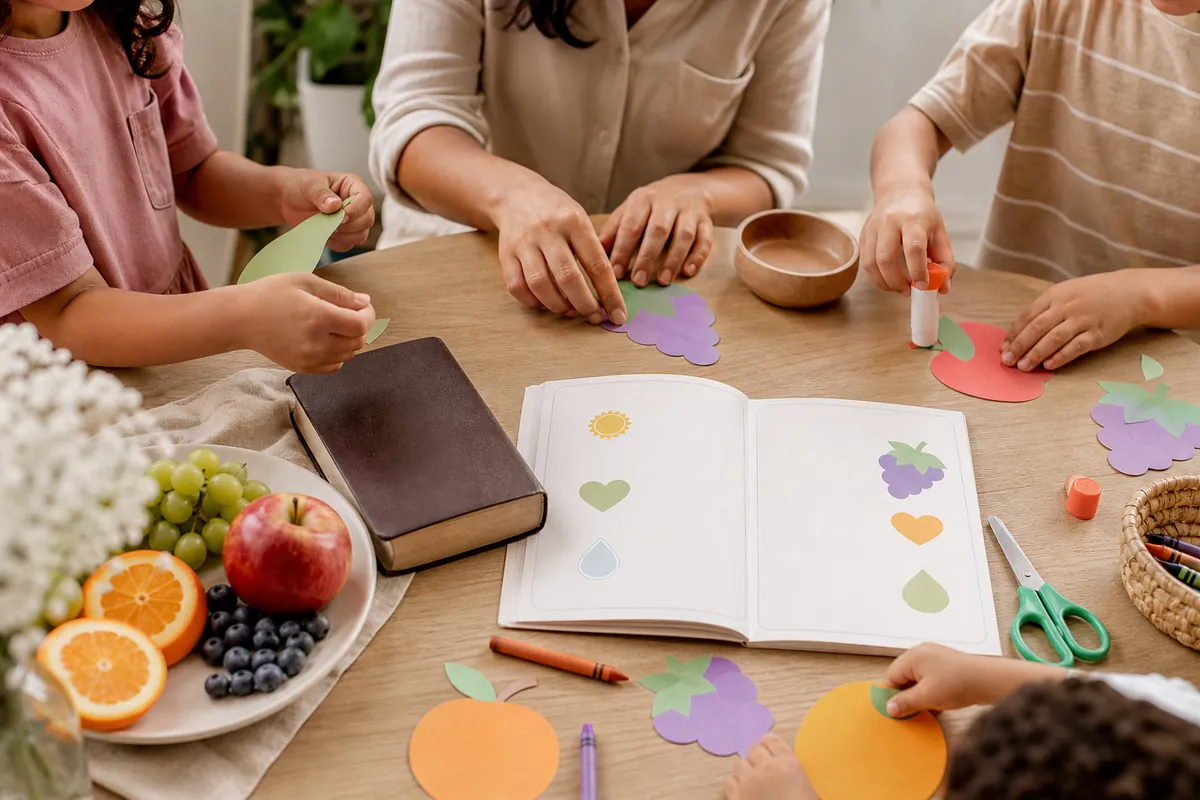
The best way to teach kids the fruits of the Spirit is with a hands-on activity where they practice a trait in a real moment, not a lecture where they recite a list. If you're looking for a fruits of the Spirit kids activity that actually sticks, the shift is simple: less telling, more doing.
Kids don't build patience by hearing a definition. They build it by waiting for something they want, with you right there naming what's happening. That's the whole idea behind everything below.
What are the fruits of the Spirit, in kid terms?
Galatians 5:22-23 lists nine: love, joy, peace, patience, kindness, goodness, faithfulness, gentleness, and self-control. For kids, it helps to translate each one into something they already recognize:
- Love — choosing someone else's turn over your own
- Joy — being glad even when things aren't perfect
- Peace — staying calm when a plan changes
- Patience — waiting without whining
- Kindness — noticing what someone else needs
- Goodness — doing the right thing when no one's watching
- Faithfulness — keeping a promise, even a small one
- Gentleness — using soft hands and a soft voice
- Self-control — stopping before you say or do the unkind thing
If your child needs the fuller explanation first, this chart-based breakdown of the fruit of the Spirit is a good starting point before you move into activity mode.
What activity actually teaches this instead of telling?
Try a "Fruit Basket Moment" — a simple game that ties each fruit to something that just happened, not something abstract.
- Keep nine paper fruit cutouts (or a printable set) in a bowl.
- Whenever you catch a real moment — sharing, waiting, staying calm — hand your child the matching fruit.
- Say what you saw in one short sentence: "You waited for your brother without complaining. That's patience."
- Let them place the fruit in a jar or on a chart they can see.
This works because it attaches the word to a real, felt experience. A child who hears "that was patience" right after living it remembers the word far longer than one who only heard it in a lesson.
How do I set this up at home in one afternoon?
You don't need a full curriculum, just a few things gathered ahead of time.
- Nine paper fruit shapes, cut from construction paper or printed
- A jar, basket, or paper tree taped to the wall
- A short list of the nine fruits somewhere you can glance at it
- One planned moment during the day to practice — mealtime, chores, or a sibling disagreement work well
Start with one fruit a day rather than all nine at once. A child who deeply understands kindness this week will apply it more naturally than one who memorized nine words in one sitting and retained none of them.
What works for Sunday school or kids church groups?
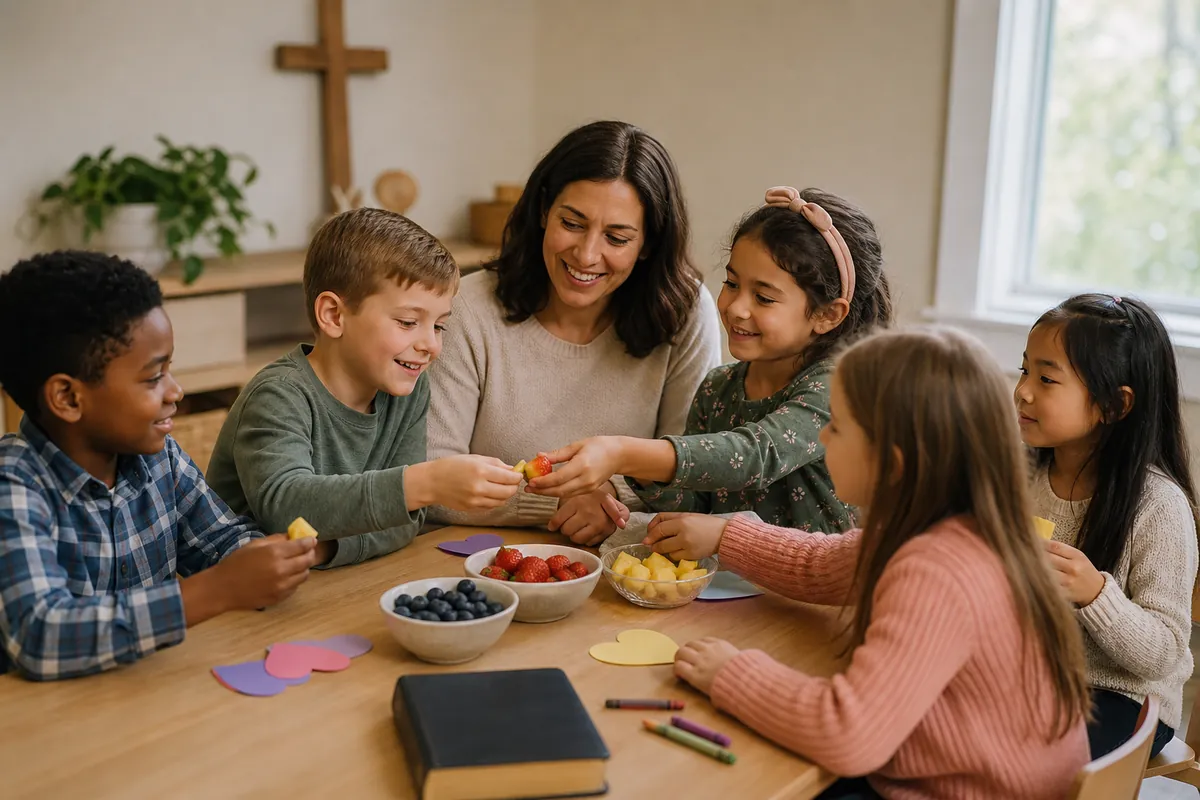
Group settings need something faster and a little more physical, since you're working with more kids and less one-on-one time.
- Fruit Charades — kids act out a fruit (waiting patiently in a fake line, sharing a toy) while others guess which one it is.
- Story Sort — read a short Bible story and stop partway to ask which fruit the character just showed.
- Kindness Relay — kids pass a small object down a line, but only after saying one kind thing to the person next to them.
If you've got a group that struggles to stay focused during quieter Bible time, pair this with ideas for kids who won't sit still during Bible time — movement-based activities like these solve both problems at once.
Keep instructions short. A ten-second explanation followed by action beats a two-minute setup every time with this age group.
How do I help it stick after the activity ends?
The activity plants the idea. What happens in the following days is what makes it stay.
- Reference it casually: "Remember Fruit Basket? That was a peace moment."
- Ask at dinner which fruit anyone practiced or noticed that day.
- Keep the jar or chart visible so it's a running reminder, not a one-time event.
- Revisit a fruit you covered weeks ago instead of only moving forward.
Kids build character the same way they build any habit — through repetition, not a single strong lesson.
What if one fruit is genuinely hard for my kid?
Some fruits will take longer, and that's expected, not a sign something's wrong. Self-control and patience are usually the slowest to develop, especially in younger kids whose brains are still learning to pause before reacting.
Instead of correcting every miss, catch the small wins. A child who counted to three instead of yelling showed self-control, even if it wasn't perfect. Naming that success does more than pointing out the failure would have.
Paul wrote in Galatians that against these things there is no law — meaning there's no rush, no scorecard, no deadline. Growth here is gradual, and that's the point.
If you want a small, low-effort way to keep the nine fruits in front of your child between activities, a set of fruits of the Spirit bookmarks can sit in their Bible or reading book as a quiet daily reminder. It's a small thing, but small daily reminders are often what makes a lesson outlast the day you taught it.
For more printable tools for teaching character and Bible basics at home or in a classroom, you can browse the full shop anytime.
Frequently asked questions
- What age is right for teaching the fruits of the Spirit?
- Kids as young as four or five can grasp simple versions of love, kindness, and patience through play and stories. By age seven or eight, they can handle all nine fruits and start naming them in their own choices.
- Do I need to teach all nine fruits at once?
- No. Most kids retain more when you slow down and spend real time on one or two fruits before moving on, rather than rushing through the full list of nine from Galatians 5 in a single sitting.
- How long should a fruits of the Spirit activity take?
- Fifteen to twenty-five minutes works well for most home or classroom settings. Shorter, repeated sessions across a week teach more than one long session that loses a child's attention halfway through.
- What if my child can name the fruits but doesn't show them?
- That's normal and not a discipline problem. Naming a fruit is a memory skill; showing it is a practiced habit, so keep giving low-stakes chances to practice rather than only correcting when it's missing.
- Can this work for a group with mixed ages?
- Yes. Give younger kids a simpler version of the same activity, like picking a fruit from a bowl or jar, while older kids write or discuss theirs. Everyone still practices the same nine traits together.
- fruit of the spirit
- kids church
- sunday school activities
- character building
- family devotions
Related reading
- How to Teach Kids to Read the Bible for ThemselvesLearn how to teach kids to read the Bible with simple, Scripture-first steps that build confidence and understanding.
- How to Teach Kids the Creation Story in 7 Simple DaysLearn how to teach kids the creation story with seven simple, Scripture-first lessons from Genesis 1 for home, class, or church.
- How to Teach Kids to Confess Sin Without Shaming ThemLearn how to teach kids about confession without shame using simple words, calm tone, and Scripture that points straight to forgiveness, not fear.